
Many home cooks refrigerate produce as soon as they get home, yet still watch herbs wilt, lettuce turn slimy, or milk sour earlier than expected. The difference often has less to do with what goes into the fridge than with how the fridge is used while cooking. Anyone hunting for reliable fridge door storage tips is usually trying to solve exactly this puzzle: why does the same refrigerator keep some ingredients crisp for days while others fade almost overnight? Part of the answer lies in temperature stability, part in how often the door opens during meal prep, and part in how the interior is organized.
This article looks at why ingredients lose freshness faster in some kitchens than others, and what role a fridge’s design and everyday habits play in that process. Rather than treating freshness as pure luck, it breaks the issue into three practical layers: what happens to food at a cellular level when temperatures swing, how cooking behavior contributes to those swings, and how storage layout and door mechanics can reduce the problem.
TL;DR — Key Takeaways
- Ingredients degrade fastest when internal fridge temperature swings repeatedly, not just when it runs slightly warm.
- Frequent short door openings during meal prep can raise internal temperature more than one longer access.
- Practical fridge door storage tips center on zoning: keeping frequently used items near the front and grouping by recipe.
- Hands-free opening mechanisms and dedicated storage zones can shorten the time a door stays open during active cooking.
Why Fresh Ingredients Fade Faster Than You Think
Ingredients do not spoil at a constant rate; they respond to how stable their environment is. Ethylene-sensitive produce, such as certain fruits and vegetables that continue ripening after harvest, degrades noticeably faster when the surrounding temperature rises and falls repeatedly rather than staying level. Each swing effectively restarts a small ripening or softening process, so a fridge that yo-yos between cold and mild will age this produce faster than one that holds a steady range, even if the average temperature looks the same on paper.
Herbs and leafy greens are especially vulnerable because they lose moisture through their leaf surfaces. Every time warm air enters the fridge and briefly raises the temperature, the humidity balance around these delicate items shifts, encouraging faster wilting and browning at the edges. This is why a bunch of parsley or a bag of spinach can look fine one day and limp the next, even without any change in how it was wrapped or stored.
Dairy products and raw proteins sit at the other end of the sensitivity scale. Their risk is less about wilting and more about how quickly bacteria can multiply once the surrounding temperature drifts upward, even briefly. A consistent internal temperature helps slow the degradation of these perishable ingredients, which is one reason cooks who prep several times a day sometimes notice their dairy and meat spoiling sooner than their instructions or expectations would suggest.
The Hidden Role of Door-Opening Habits in Ingredient Freshness
How often the fridge door opens during cooking matters just as much as how the fridge is set. Frequent or prolonged door opening causes temperature fluctuations inside a refrigerator, and these fluctuations compound. A single long check, like pulling out ingredients for a whole meal at once, allows the compressor to recover in one steady cycle. Multiple short openings scattered across an hour of prep, by contrast, interrupt that recovery again and again, so the interior never fully settles back to its target range before the next disruption arrives.
This distinction matters most for people who batch-prep. Cooks assembling several components at once, chopping vegetables, checking marinades, pulling out condiments, tend to open the fridge far more often than someone making a single simple dish. Each trip introduces a small burst of warm kitchen air, and the cumulative effect over a busy prep session can rival or exceed the temperature impact of one long opening.
Door seals and overall door design also shape how much cold air actually escapes each time. A worn or poorly fitted seal lets air exchange happen faster, while a tighter seal and a door shaped to minimize the gap slow that exchange down. This is one reason two fridges set to the same temperature dial can behave differently in a real kitchen: the number, length, and design context of door openings changes the outcome as much as the thermostat setting does.
Organizing a Single Door Fridge for Maximum Freshness
Layout is one of the few freshness factors a cook can control directly, and it works by shortening the time the door needs to stay open. Placing frequently used ingredients, such as eggs, condiments, or daily-use vegetables, near the front and at eye level reduces the search time behind an open door. The longer someone has to scan shelves for a specific jar, the longer warm air keeps flowing in, so visibility and reach matter as much as the temperature setting itself.
Grouping ingredients by recipe or meal plan is a second lever. Instead of storing all vegetables together and all proteins together regardless of what they are for, arranging items by the meal they belong to means one trip to the fridge can retrieve everything needed for that dish. This minimizes repeat visits during the same cooking session, which directly reduces the number of door-opening events that add up to temperature drift.
Clear bins and labeled containers support the same goal from a different angle. When contents are visible at a glance, there is no need to lift lids or move items aside to identify what is inside, which shortens each individual door-open moment. The sequence that tends to work best in practice is straightforward: sort ingredients by how often they are used, place the most frequent items closest to hand, then group the rest by the meals they belong to rather than by food category alone.
Smart Fridge Features That Support Better Storage
Fridge design itself can either work with these habits or against them. One mechanism that directly addresses the door-opening problem is hands-free opening, which lets a cook with full hands, holding a mixing bowl or a stack of ingredients, nudge the door closed quickly instead of fumbling for a handle. Shortening that final step matters more than it might seem, because the last few seconds of an open door are often the ones where a cook is distracted and the door lingers open longest.
Storage zones designed for quick access serve a similar purpose. A refrigerator with a clear, single compartment layout, rather than a maze of drawers and half-shelves, makes it easier to locate items without extended searching, which shortens the open-door window during active cooking. Some manufacturers build this thinking into single-door models specifically, since a single door means there is only one seal and one opening event to manage rather than several.
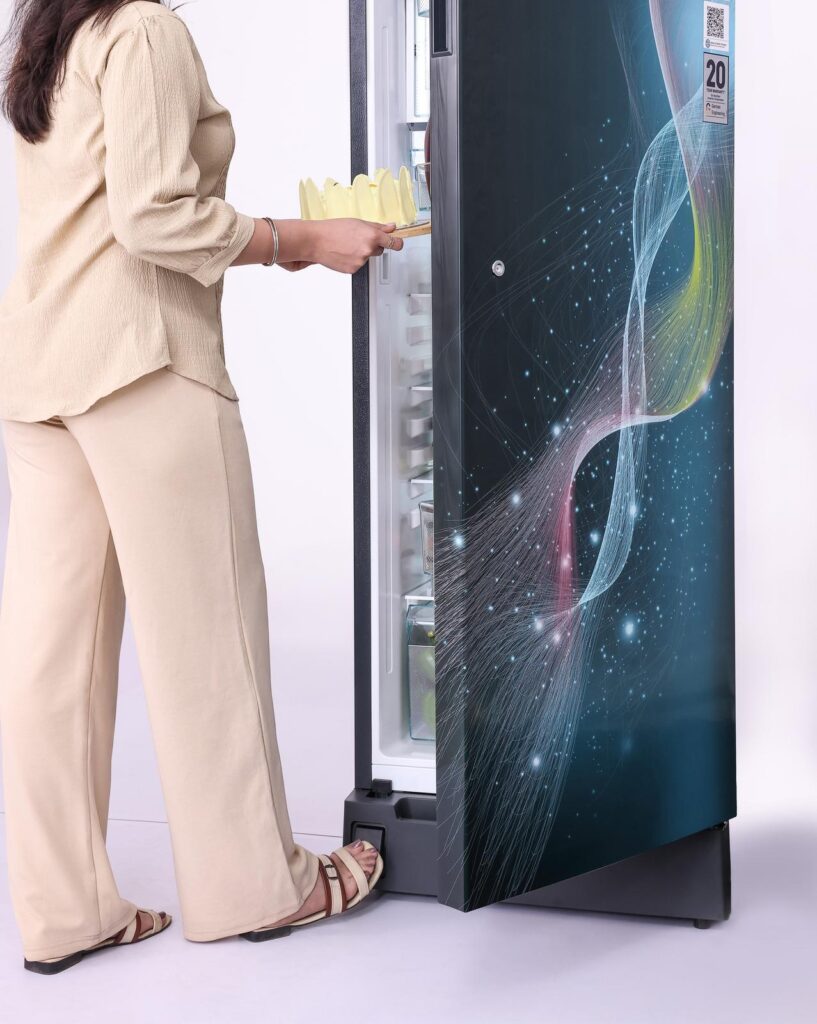
A single door fridge with dedicated storage zones and hands-free opening reflects this same logic: fewer moving parts to navigate and a faster close reduce the cumulative warm-air exposure that builds up over a cooking session. For a household that preps meals frequently throughout the week, this kind of design detail is not cosmetic; it addresses the exact mechanism described above, where repeated short openings do more cumulative damage to freshness than occasional longer ones.
Liebherr’s HandsFree Opening uses a foot pedal at the base, so the door can open when both hands are full of produce — and the handle stays cleaner because it is touched less.
Frequently Asked Questions (FAQ)
What is the ideal fridge temperature range for most produce?
Most refrigerated produce keeps best when the interior stays consistently cold rather than hovering near the warmer edge of the safe range. The exact number matters less than stability: a fridge that holds a steady cold temperature will generally outperform one that technically averages the same reading but swings up and down throughout the day.
How long does it take for fridge temperature to restabilize after the door closes?
Recovery time depends on how long the door was open, how much warm air entered, and how full the fridge is, since a fuller fridge holds cold air better than a mostly empty one. As a general pattern, longer or more frequent openings require more recovery time before the interior fully returns to its set range, which is why minimizing both the frequency and duration of openings supports more consistent storage.
Which ingredients need the coldest zone in the fridge?
Raw proteins and dairy generally benefit from the coldest, most stable zone because their spoilage risk is tied closely to temperature consistency. Produce that is sensitive to chilling injury, such as some tropical fruits, may actually do worse in the coldest spot, which is why matching ingredient type to fridge zone, rather than assuming colder is always better, is part of effective storage.